
Chromium-6
Litigation
California’s effort to regulate Chromium 6, a naturally occurring carcinogen found in groundwater across 53 of 58 counties, has been contested for over a decade. The state first adopted a Maximum Contaminant Level of 10 parts per billion in 2014, but a Sacramento court invalidated it in 2017, ruling the Department of Public Health failed to adequately assess economic feasibility.
After years of additional study and public comment, the State Water Resources Control Board adopted a new 10 parts per billion standard in April 2024. Water providers statewide immediately challenged the regulation again, arguing compliance costs estimated at nearly $180 million annually remained economically unworkable, particularly for small and mid-sized systems serving disadvantaged communities on fixed incomes.
2025 Petition
In November 2024, SAMWAC joined a coalition of California water agencies in filing a legal challenge in Fresno County Superior Court against the State Water Resources Control Board over its newly adopted Chromium 6 (hexavalent chromium) Maximum Contaminant Level of 10 parts per billion. Although SAMWAC’s water had met all standards prior to the new regulation, naturally occurring Chromium 6 in its three production wells placed it slightly above the new threshold. Facing compliance costs of millions of dollars to be borne by its 136 ratepayers, many of them retirees on fixed incomes, SAMWAC argued the Board failed to adequately assess economic feasibility and relied on outdated science. The State Attorney General filed an opposition brief in December 2025 defending the regulation, arguing the Board conducted a thorough and lawful rulemaking process to protect public health from a known carcinogen. The case was pending before Judge Tyler D. Tharpe as of early 2026.
SAMWAC has joined with the other original petitioners to appeal the decision.
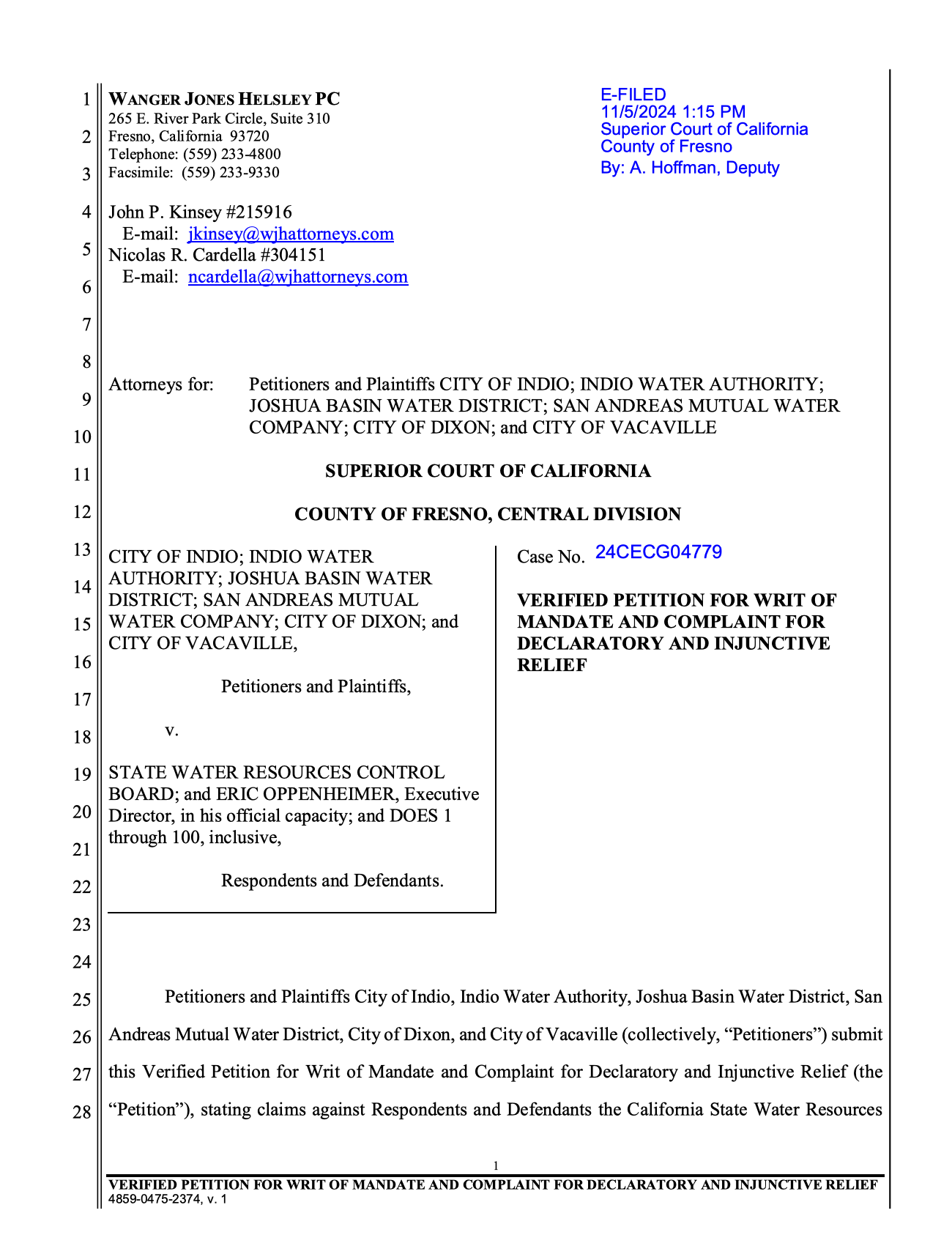
Petition
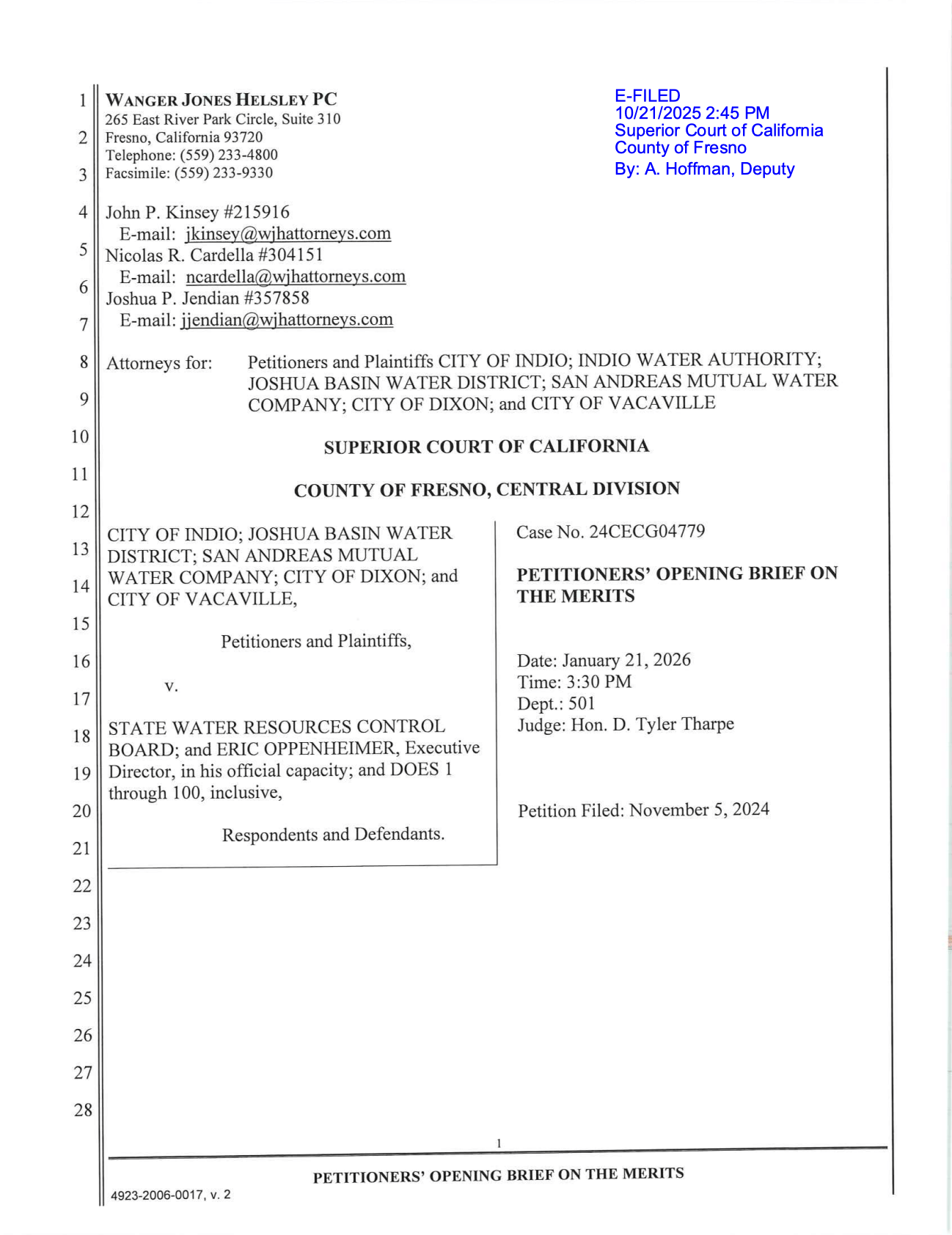
Petitioner's Brief
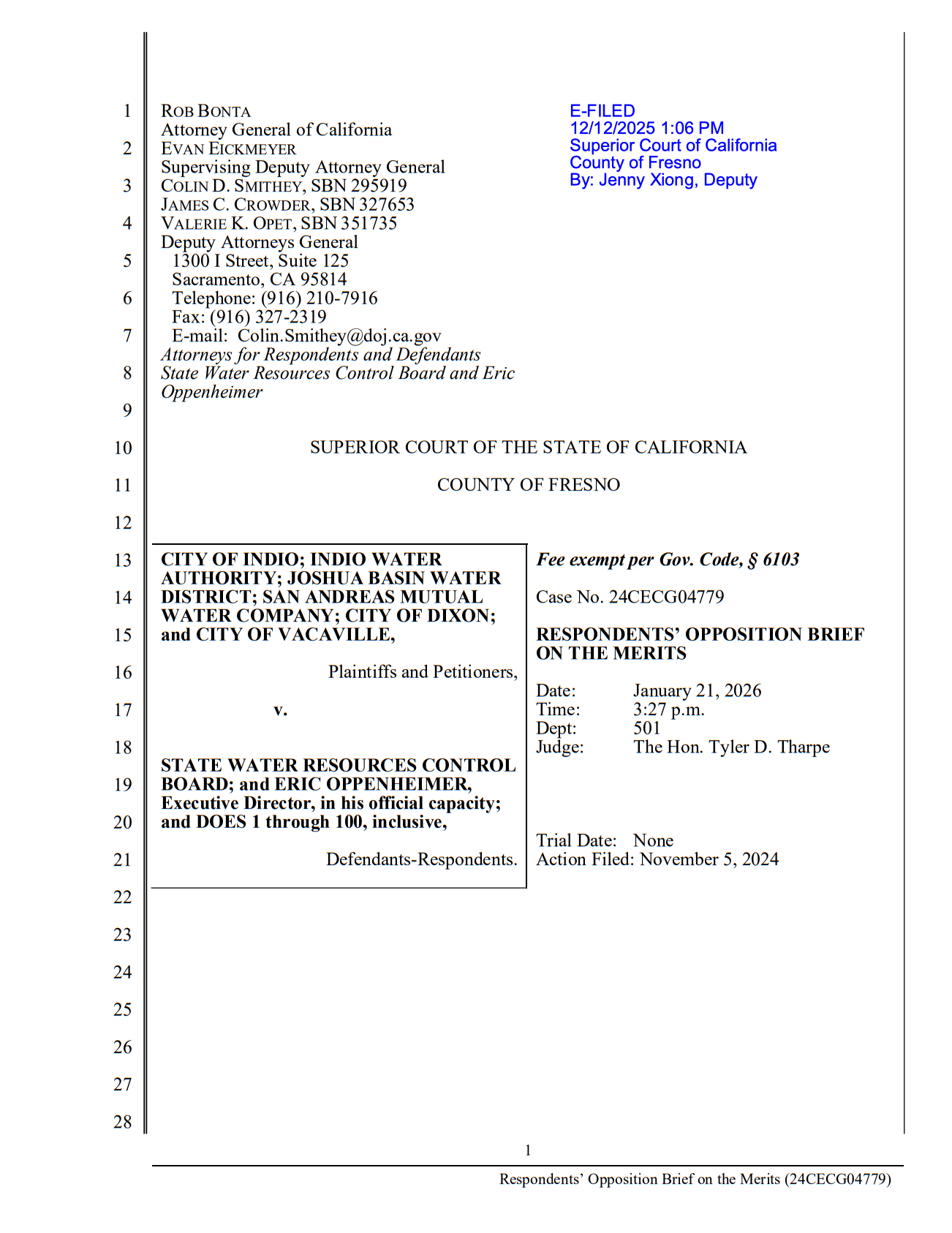
State's Response
Appeal Petition
2015 Petition
The litigation began May-2014, very soon after the new Maximum Contamination Level (MCL) for Cr-6 was changed from 50ppb to 10ppb. After almost two years of legal procedures, the first decision of any real effect was issued.
The judge ruled that the State had not adequately considered the economic feasibility of complying with the MCL it had adopted, and requested the parties submit further information. Date is 26-Aug-2016
After considering the information presented in response to the preliminary ruling, the judge requested yet another round of briefs to answer questions outlined in the order. Date is 15-Nov-2016
The first round of briefs (each side’s brief is supported by a declaration) were filed 10-March-2017. In addition, an Amicus Curiae (Friend of the Court) letter was filed by Mission Springs Water District.
Responses to the briefs followed on 24-March-2017. The Petitioner offered two additional statements from systems that were mentioned in the State’s briefs. The State offers additional comments from one of their staff.
The judge decided based on the facts available to issue a final ruling. The document is below. The state is back to 50 ppb for Cr-6 and the State must start the regulation process over from scratch.
The judge issued the “Peremptory Writ of Mandate”, or final order, to the State Water Resource Control Board. Effective immediately, the State must extract all references to the invalid MCL and document this to the court within 75 days. The State has 60 days from this order to appeal to a higher court.
